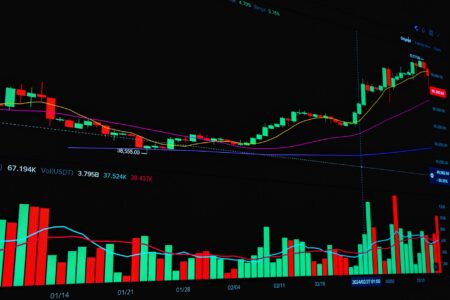




A car rental company’s wild price swings have pulled one of America’s oldest stock benchmarks into uncharted territory this month. Avis Budget Group’s dramatic trading sessions are creating ripple effects that extend far beyond the rental car industry, demonstrating how individual stock movements can distort entire market measures.
The volatility stems from intense speculation and trading activity surrounding Avis Budget shares, which have experienced massive intraday price fluctuations. These movements are magnifying the company’s influence on the broader index, creating distortions that mask the underlying performance of other constituent stocks.

Index Composition Creates Amplification Effect
The Russell 2000 index, which tracks small-capitalization stocks, has found itself at the mercy of Avis Budget’s erratic trading patterns. As one of the index’s components, the rental car company’s price movements carry disproportionate weight during periods of extreme volatility. Market makers and institutional investors who track the index must adjust their positions in response to these swings, creating additional buying and selling pressure.
Professional traders have noted unusual patterns in the index’s behavior that coincide directly with Avis Budget’s most active trading periods. When the stock surges, the Russell 2000 experiences corresponding upward pressure. During sharp declines, the index moves lower in lockstep. This correlation has become so pronounced that some investors are treating Avis Budget as a proxy for broader small-cap sentiment.
The phenomenon highlights structural issues within capitalization-weighted indexes, where companies experiencing high volatility can exert outsized influence on the benchmark’s performance. Fund managers who passively track the Russell 2000 find themselves inadvertently taking large positions in a single volatile stock, regardless of their views on the rental car sector’s fundamentals. Exchange-traded funds tied to the index have recorded their highest daily trading volumes in months, as investors attempt to capitalize on or hedge against these movements.
Trading Mechanics Behind the Chaos
Options activity surrounding Avis Budget has reached extraordinary levels, with daily volume exceeding historical norms by several multiples. This derivatives trading creates additional demand for the underlying shares as market makers hedge their positions, amplifying the stock’s price movements in both directions.


Short sellers have also played a significant role in the stock’s volatility, with borrowing costs for Avis Budget shares reaching elevated levels. When these positions are forced to cover during rapid price increases, the resulting buying pressure creates feedback loops that push prices even higher before inevitable corrections occur.
Broader Market Implications
The situation reveals fundamental weaknesses in how market indexes respond to individual stock disruptions. Portfolio managers overseeing billions in assets tied to small-cap benchmarks have expressed frustration with the distortions, noting that their performance metrics no longer accurately reflect their stock-picking abilities or sector allocation decisions. Some are considering adjustments to their tracking methodologies to minimize the impact of extreme outliers.
Retail investors following the Russell 2000 as a gauge of small-company performance are receiving misleading signals about the broader market’s health. The index’s recent movements tell more about speculative trading in a single stock than about underlying economic conditions affecting small businesses. This disconnect has prompted discussions among index providers about potential methodology changes to address concentration risk.
Institutional investors are adapting their strategies to account for this new reality. Some have begun excluding Avis Budget from their Russell 2000 exposure through derivatives strategies, while others are using the volatility to implement tactical trading approaches. The rental car company has become a case study in how modern market structures can amplify individual stock movements across entire asset classes.

Market historians note that while individual stocks have previously influenced indexes during periods of extreme volatility, the current situation with Avis Budget represents an unusually sustained example of tail wagging dog dynamics. The company’s market capitalization relative to the Russell 2000’s total value doesn’t justify its current influence on daily price movements, yet the mathematical mechanics of index construction continue to magnify every price fluctuation into a broader market signal.