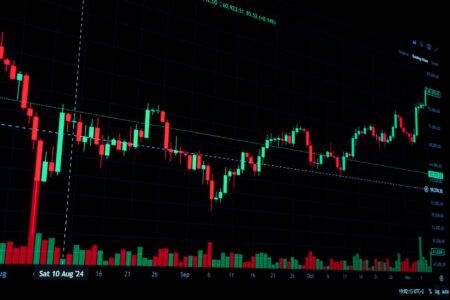




JPMorgan analysts are sounding alarms about a fundamental disconnect in oil markets, arguing that current prices fail to reflect underlying supply and demand realities.


Mathematical Mismatch in Energy Markets
The investment bank’s commodities team describes the situation as “simple math” – oil prices need substantial increases to balance global energy equations. Current market pricing doesn’t account for tightening supply conditions and persistent demand growth across major economies. Without this correction, the bank warns that more severe market dislocations await.
Energy analysts at JPMorgan point to several factors creating this pricing distortion. Global inventory levels remain below historical averages, while production capacity constraints limit quick supply responses. Meanwhile, demand continues growing in key markets, particularly as economic activity rebounds and travel patterns normalize.
The bank’s research suggests that maintaining artificially low prices will ultimately prove counterproductive. Market forces will eventually assert themselves, potentially through sudden price spikes that create more economic disruption than gradual increases would. This scenario could trigger the very demand destruction that current low prices temporarily avoid.
JPMorgan’s commodity strategists emphasize that delaying price adjustments only intensifies eventual market corrections. The longer prices remain disconnected from fundamentals, the sharper the eventual realignment becomes. This dynamic has played out repeatedly in commodity cycles, where artificial price suppression leads to more violent corrections.

Pump Price Reality Check
American consumers face inevitable increases at gas stations as global oil dynamics reshape domestic energy costs. JPMorgan’s analysis indicates that U.S. pump prices must rise to reflect true supply conditions, regardless of political preferences or consumer sentiment. The bank views current retail gasoline prices as unsustainable given underlying crude oil market fundamentals.
Refining capacity limitations compound the pressure on domestic fuel prices. Several major refineries have reduced operations or closed permanently in recent years, creating bottlenecks between crude oil supplies and finished gasoline products. These structural changes mean that even modest crude price increases translate into larger percentage gains at the pump.
Regional price variations will likely intensify as transportation costs and local supply dynamics create greater disparities across different markets. West Coast consumers already experience premium pricing due to unique fuel specifications and limited pipeline access. Similar patterns may spread to other regions as supply chains face increasing stress.
The bank’s economists note that higher fuel costs will ripple through the broader economy, affecting everything from shipping expenses to consumer discretionary spending. Transportation-dependent industries face particular pressure, with airlines, trucking companies, and ride-sharing services confronting margin compression. These businesses will likely pass increased costs to customers, creating broader inflationary pressures.
Consumer behavior changes typically lag price increases, meaning initial demand remains relatively inelastic. This delay creates a window where higher prices don’t immediately reduce consumption, maximizing revenue extraction from existing demand patterns. Only after sustained price increases do consumers significantly alter driving habits, vacation plans, and vehicle purchasing decisions.
Demand Destruction Dynamics
JPMorgan defines demand destruction as the point where price increases force consumers to reduce energy consumption significantly. This threshold varies by region and income level, but historical patterns suggest clear breaking points where behavioral changes accelerate rapidly. The bank expects these dynamics to emerge as price corrections unfold across global markets.

The timing of demand destruction depends partly on economic conditions and alternative energy availability. During periods of strong economic growth, consumers can absorb higher energy costs longer before cutting consumption. However, when combined with other financial pressures, energy price spikes can trigger broader spending reductions that extend beyond just fuel purchases.