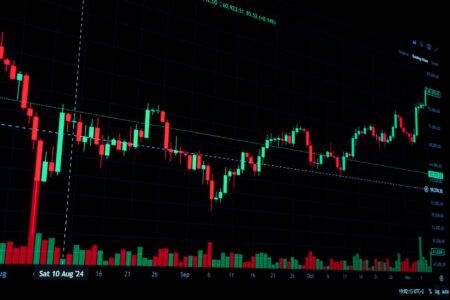



A precious metals ratio that has accurately predicted market downturns for decades is flashing warning signs about the current stock rally. The gold-platinum ratio, tracked by institutional investors as a leading indicator of market stress, suggests equities may be vulnerable to a significant pullback.
This technical measure compares the relative values of gold and platinum, two metals that respond differently to economic conditions.
When the ratio climbs above historical norms, it has historically preceded major stock market corrections by several months, making it a closely watched barometer among professional traders.

The Mechanics Behind the Signal
Gold and platinum serve different economic functions, creating a natural tension in their price relationship. Gold acts as a safe haven during uncertainty, while platinum depends heavily on industrial demand, particularly from the automotive sector for catalytic converters. When investors grow nervous about economic prospects, they bid up gold while platinum demand weakens from reduced manufacturing activity.
The current gold-platinum ratio sits well above its long-term average, indicating that gold has substantially outperformed platinum in recent months. This divergence typically occurs when institutional money managers begin rotating out of risk assets and into defensive positions, even as headline stock indices continue climbing.
Historical analysis shows this ratio has provided early warning signals before major market corrections, including the 2008 financial crisis and the 2020 pandemic selloff. The indicator’s strength lies in its ability to capture subtle shifts in professional investor sentiment before they become obvious in equity prices.
Current Market Dynamics
The elevated ratio comes as stock markets continue posting gains, creating a disconnect between precious metals signals and equity performance. This divergence mirrors patterns seen in previous market cycles, where warning indicators emerged months before actual corrections materialized in stock prices.

Professional money managers often use the gold-platinum ratio as part of broader risk management strategies, viewing it as a complement to traditional valuation metrics and technical analysis. The ratio’s current level suggests these sophisticated investors are already positioning for potential market turbulence, even as retail sentiment remains optimistic.
Market timing indicators like this ratio operate on longer time horizons than daily trading signals, making them particularly valuable for investors managing significant portfolios. The lag between signal emergence and market action typically ranges from several weeks to several months, providing institutional investors time to adjust their positions gradually.

The ratio’s predictive power stems from its ability to capture the collective wisdom of metals markets, where participants often have different information sets and incentives than equity investors. While no single indicator guarantees future performance, the gold-platinum ratio’s track record has earned respect among quantitative analysts who incorporate multiple signals into their market timing models.